A paleobotanical puzzle

The plant fossil record is composed of fragments that represent different parts of the plant body and different stages of the plant life cycle. Part of the challenge in paleobotany is putting the pieces back together and getting a concept of the whole organism. Recently I was looking through the Smithsonian’s collections from the Patuxent Formation in Virginia because I was searching for fossils of early flowering plants. One of the most common plant fossils in the Patuxent Fm. are the leaves known as Dioonites buchianus. Dioonites leaves look like the leaves of a cycad, but there are several extinct groups of gymnosperms that had cycad-like foliage. In Cretaceous collections, cycad-type foliage typically comes from plants either in the order Cycadales, or in the extinct order Bennettitales.

Dioonites buchianus leaf

Dioonites buchianus leaf with fern

The standard way to tell whether compressed cycad-type leaf fossils are cycads or bennes is to examine the stomata. Stomata are the pores in the leaves that plants use to transpire water and take up carbon dioxide. Bennettitalean stomata have a unique development and morphology that makes them recognizable. They have thickened cuticle on the outer and dorsal walls of the guard cells, they are arranged more or less in rows, and the stomatal pores are oriented perpendicular to the veins (Taylor et al. 2009). Lets have a look using an epifluorescence microscope…

dioonites buchianus epidermis

Epidermis of Dioonites buchianus

dioonites buchianus stomata

Stomatal pore of Dioonites buchianus

BINGO! Dioonites buchianus is a benne. In both photos, the veins run from the lower right to the upper left, but they are not visible.

I also note that it seems to be a general rule that the leaflets or blade of bennettitalean leaves attaches along the upper surface of the petiole (rachis), whereas in cycads it generally inserts along the middle of the rachis. In D. buchianus, the leaflets attach along the top.

Dioonites buchianus

Dioonites buchianus, scale=1cm

I also noticed that in some of the collections there are a few fossils that belong to the species Williamsonia virginiensis. Williamsonia fossils are cones or parts of cones produced by some bennettitalean plants. This intrigued me and I decided to test the hypothesis that the same plants produced the leaves called Dioonites buchianus, and the cones Williamsonia virginiensis.

USNM 3404 cpt

Williamsonia virginiensis

Williamsonia virginiensis

Williamsonia virginiensis

Williamsonia virginiensis cones consist of bracts (modified leaves) arranged around a central scar. The central scar is where the ovulate receptacle attached. The ovulate receptacle is a distinctively bennettitalean structure that bears the megasporophylls and seeds. See an example here, on the right. Sometimes these structures are found isolated with exceptional preservation (Stockey and Rothwell 2003). Unfortunately, I haven’t seen any of these ovulate receptacles in the collections.

USNM 3404

Williamsonia virginiensis

In the lieu of finding the Williamsonia cones and Dioonites leaves actually connected in a single fossil via a stem, I had to employ alternative approaches for demonstrating affinity. One way is to analyze association data, and another is to demonstrate morphological and structural similarities.

First, I looked at a table of all the individual sites where plant fossils have been collected from the Patuxent Formation and what species were found. I noticed that only some of the collections included both D. buchianus and W. virginiensis, but that fossils of Williamsonia virginiensis were never found without abundant fossils of D. buchianus from the same site. If I had found that each was often found without the other, I’d be more likely to conclude that they came from different species.

Next, I decided to compare the epidermal structure of the bracts of the Williamsonia cones with the Dioonites leaves.  Above we saw that the cells on the surface of the leaves have wavy (or crenulate) margins and stomata that are sunken, arranged in rows with the pores oriented perpendicular to the veins, and surrounded by two thickened cells that fluoresce brightly under the scope. Only one Williamsonia had the original carbon of the bracts preserved and thus the potential to see the epidermis under the scope. 

LJH 71 117 williamsonia

Williamsonia virginiensis

Cuticle of W virginiensis

Cuticle of Williamsonia virginiensis

The margins of the epidermal cells are less crenulate, but the stomata have similar structure! Although I think the similarity supports the hypothesis that these two go together, what I saw still surprised me. I expected to see the epidermal cells with the crenulated margins, and no stomata. I suppose the various illustrations that I have seen over the years of bennettitalean flower-like cones with petal-like white or otherwise colored bracts is what was behind this expectation. But the stomata are there, and they are abundant! This means that in life the bracts were probably green, and based on the density of stomata, I’ll bet they were important in supplying photosynthate to the developing ovules/seeds!

Stockey and Rothwell 2003

Taylor et al. 2009

Potomac Group exhibit

I want to share this interactive website from the Smithsonian with my followers! There is a significant plant component, but also some dinosaurs or whatever…

Its all about Cretaceous fossils from the Potomac Group, some of which I wrote about in my second post.

http://www.mnh.si.edu/exhibits/backyard-dinosaurs/index.cfm

Sphenopsids

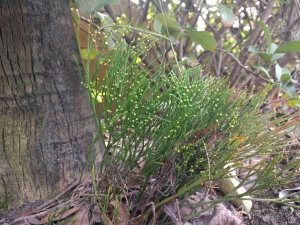
I like horsetails. Living Equisetum stands alone representing an entire class of land plants, and one could argue that it is the most successful genus of vascular plant in the world. Species are found on every continent except Antarctica. [Note: Equisetum is introduced in Australia today, but extinct sphenopsids including Equisetum grew there during the Mesozoic, as is also the case for Antarctica.] Studies of well-preserved fossils from the Early Cretaceous and Jurassic have shown that they have been doing basically the same thing for ~150 million years (Stanich et al. 2009; Channing et al. 2011); and Triassic (~225Ma) compression fossils suggest the genus may be older. Fossil evidence demonstrates that Equisetum is probably the oldest living genus of vascular plant.

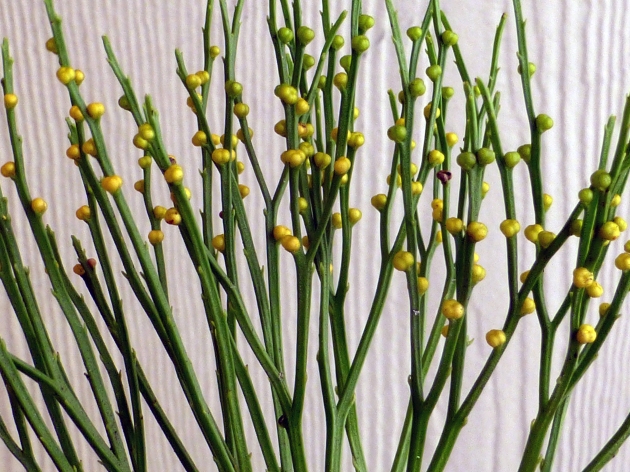
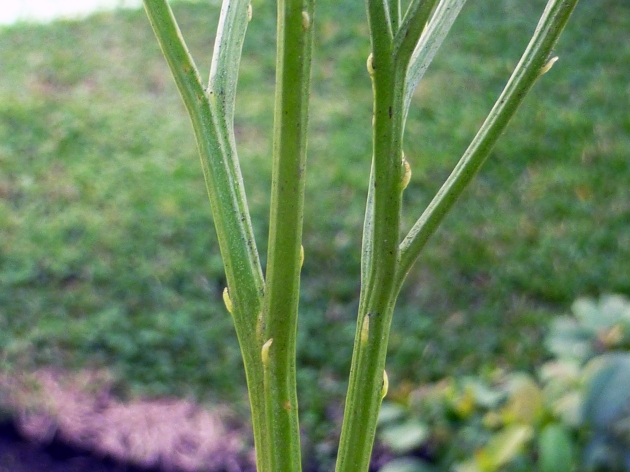
Living and extinct horsetails are easily recognized by their distinct jointed stems with whorls of leaves and sometimes branches borne at the joints (nodes). The spore-producing structures are aggregated into a strobilus or cone.

Deep/old branches of the tree of life that have few genera or species today, like horsetails, often turn out to have a rich fossil record of extinct diversity that encompasses a much broader range of morphology, life history, and ecology than can be found among modern representatives.

A recent paper in Review of Palaeobotany and Palynology re-emphasized this point for me.  Rößler et al. (2012) described a fossil horsetail from the Permian of Germany (~250-300 million years ago) that they called Arthropitys bistriata. This plant was a large tree (15 meters or more) with wood and growth rings, and a branched crown! Hardly the stream-side herb in the photo above.

There have been other descriptions of fossil horsetails showcasing their extinct diversity in the last few years. Neocalamites horridus (Shuquin et al. 2012) from the Triassic of China looked like a giant Equisetum covered in sharp prickles, and Sphenophyllum costae (Bashforth and Zodrow 2007) from the Pennsylvanian of Nova Scotia was an elaborate bramble with distinct orders of branching that produced a range of leaf types, from fan-shaped leaves for capturing light, and hook shaped leaves for climbing and support.

Last fall my wife and I found our own horsetail fossils while collecting plant fossils in the Cloverly Formation in Wyoming. This specimen is broken at the node, so what you are seeing from the bottom up is a stem, with a whorl of flimsy looking branches in the middle of the photo. The branches subtend (are directly below) a whorl of leaves that are mostly fuzed into a collar with free tips, kinda like Bart Simpson’s hair. The node is under that collar, and that’s where the top of the plant broke off.

Rößler et al. 2012 The largest calamite and its growth architecture – Arthropitys bistriata from the Early Permian Petrified forest of Chemnitz. Review of Palaeobotany and Palynology 185 p.64-78

Petrified Forest National Park

The record of petrified wood, across all continents, and back to the Devonian period tells about the history of earth’s forests. Petrified wood preserves information about things like taxonomic identity, canopy structure, seasonality, and productivity. Coupled with an understanding of the sedimentogical context of the rocks in which the wood is preserved we can learn even more, like the soil preferences and spatial structure of the trees (if they are preserved in place) or about the events that resulted in the trees’ burial and preservation.

I was recently on a trip with my wife that took us through Petrified Forest National Park during National Park week (not by accident) where the Triassic Chinle Formation is exposed and the remains of a ancient forests are preserved. I’d never been before, but I’d seen the wood in museums, and am familiar with some of the vertebrate paleontology that is going on involving some Smithsonian scientists; so I was excited to finally experience the place.

Obviously, I expected to see a lot of petrified wood, but even so I was impressed! Vast fields of deep red silicified wood dot the landscape not far from historic route 66 which runs through the park. Walking trails wind through some of the fields, taking the visitor past impressive specimens, while in other areas visitors can look down into valleys littered with wood. As erosion exposes the grey-blue and red sediment of the ancient floodplain deposits (which make for beautiful backdrops), the wood-bearing horizons are occasionally exposed. When this happens the mud and sand washes away, but the heavy petrified wood rests on the surface.

The wood comes from several levels in the Chinle Formation, but most of it comes from the Petrified Forest Member and the Sonsela Member. These units are a sequence of channel fills and floodplain deposits which no doubt supported vegetation, but the trees that produced the wood known as Araucarioxylon arazonicum, (Triassic conifer wood) were not preserved in growth position. None of the logs are upright and none of them have roots, though the largest specimens show the basal flare. The wood is generally found in the cross-bedded conglomerates and cross-bedded conglomeratic sandstones. These are the channel fills, which rest on scour surfaces with 1-7 meters of relief. This all suggests that ~210 Million years ago there was high energy flow capable of transporting and then burying the tremendous logs, sometimes forming log jams.

The longest petrified logs measured at the park are ~43 meters (~140 feet) and up to 3 meters in diameter. The canopy may have been 60 meters (~200 feet) high. More than ten other types of petrified wood have been identified, but most of them are rare. In addition to conifers, there are also tree-ferns, a Ginkgo relative, and Calamites. The wood doesn’t have annual growth rings, which tells us that growing conditions were generally good year-round; a conclusion that is consistent with the presence of tree ferns which generally don’t tolerate cold temperatures.

If you get a chance to go through Petrified Forest, I highly recommend it. We had a great time and they do a good job of painting the picture of the ancient ecosystem, including the early dinosaurs and other animals.

Up the Andes and back in time

In 1924 Lincoln Ellsworth funded a John’s Hopkins University expedition to the Peruvian Andes and among the items that were brought back was a small collection of Lower Cretaceous plant fossils. They were described by paleobotanist E.W. Berry in 1939 and about two weeks ago I found them in the Smithsonian’s paleobotanical collections. When I find an interesting old collection like this one I like to get a little bit of background information on the people who made it, or in this case who made it possible. Lincoln was the only son of James Ellsworth, who made millions as a banker and owner of coal mines across Ohio, West Virginia and Pennsylvania in the late nineteenth and early twentieth century. As an adult Lincoln ended up living and traveling on a trust set up for him by his father. While working for years to set up an expedition to the North Pole, which finally happened in 1925, Lincoln financially supported the Johns Hopkins University trip to the Peruvian Andes in 1924.

In the 1939 report Berry reported the following taxa collected near Huallanca, Peru: Equisetities sp. Coniopteris peruviana, Cladophlebis browniana, Cladophlebis sp. Ruffordia goepperti, Klukia raciborski, Onychiopsis sp. Weicheselia retculata, Thinnfeldia sp. Sagenopteris cf. paucifolia, Otozamites peruvianus, Pterophyllum sp. Cycadolepis bonnieri, Podozamites sp. Brachyphyllum peruvianum, and Thujites pompeckji

When I read old species names from people like Berry and other early 1900′s american paleobotanists for the first time I pay little attention to the specific epithet (the second part of the species names) for a variety of reasons. Many of those old authors were over-splitters, increasing the number of species based on a few or uninformative characters, or based on geographic location. The generic names tell me what major group (e.g. fern, conifer, etc.) the fossil belongs to, but are often also outdated and require taxonomic revision. This is primarily a collection of ferns, cycads, and conifers. When I found the specimens in the museum’s collection, what struck me about them (and stuck Berry as well) was their familiarity. They were deposited sometime in the early part of the Early Cretaceous (145-125Ma) when South America and Africa were united in a single continent, but separated from North America and Eurasia. Nonetheless, Barry’s Weichselia, Sagenopteris, Cladophlebis, Ruffordia, and Coniopteris peruvianus are all indistinguishable from forms found in Europe and North America that I am familiar with. Others probably fit the same pattern, given that Barry chose to give them familiar generic names.

I said that I was struck by the familiarity of the fossils, but it is important to remember that the early part of the Early Cretaceous was globally warm time and therefore the climate gradient from the equator to the poles would have been less steep that it is today. The kinds of plants and the fine-grained, dark nature of the rock suggest that these plants probably grew in a swampy or wetland habitat, as did their northern counterparts. Under similar temperatures, similar water-availability conditions, and similar soil conditions, finding similar plants is not that surprising. Still, were talking across continents here (final separation from North America was in the Middle-Late Jurassic). With more fossils and a better understanding of the taxa that I am not yet familiar with, I wonder if it is even be possible to tell whether a given collection from the early part of the Early Cretaceous is from South America or North America/Europe based on relatively common leaf fossils alone.

Berry, E.W 1939. The fossil plants from Huallanca, Peru. in Contributions to the paleobotany of middle and South America. Johns Hopkins University Press.

Cycadeoidea

Cycadeoidea is one of the classic genera of extinct Mesozoic plants. A 1971 reconstruction is widely reproduced online, and there was even a Fossil Cycad National Monument dedicated to these fascinating plants in South Dakota where many were preserved in place. Unfortunately, it was officially closed in 1975 because poachers had taken nearly all of the fossils.

Readers with something of a paleobotany background may already know that cycadeoids are not the same as modern cycads, and that early interest in these plants was driven by the hypothesis that they are closely related to flowering plants. Today it appears that cycadeoids were part of their own distinct lineage of seed plants, and the sister group of flowering plants continued to be debated.

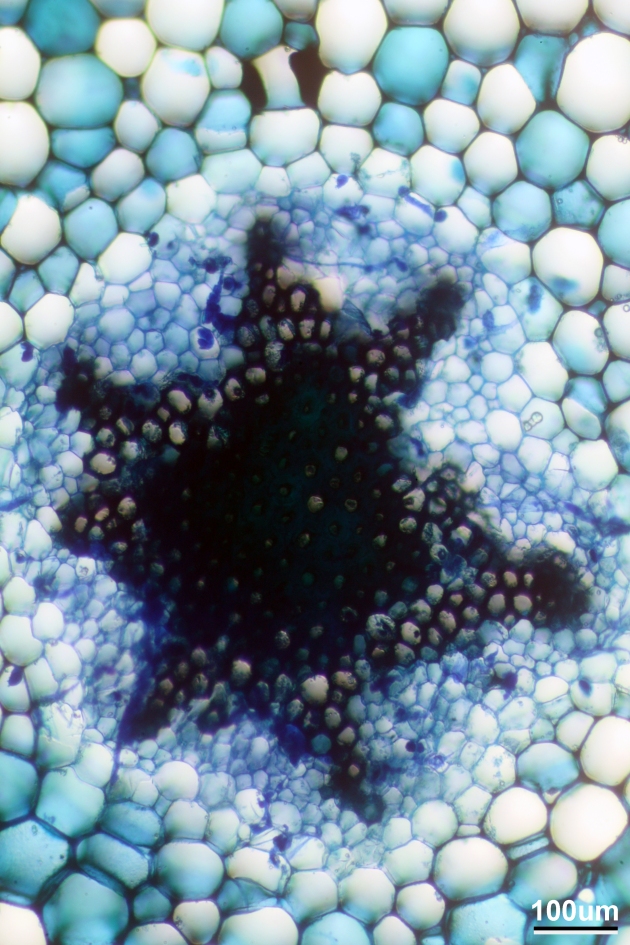
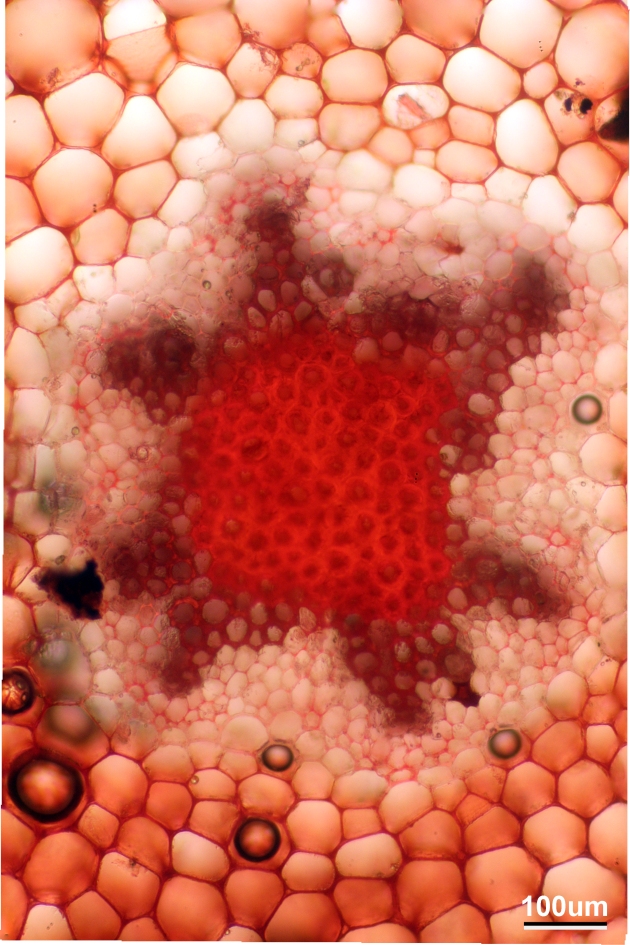
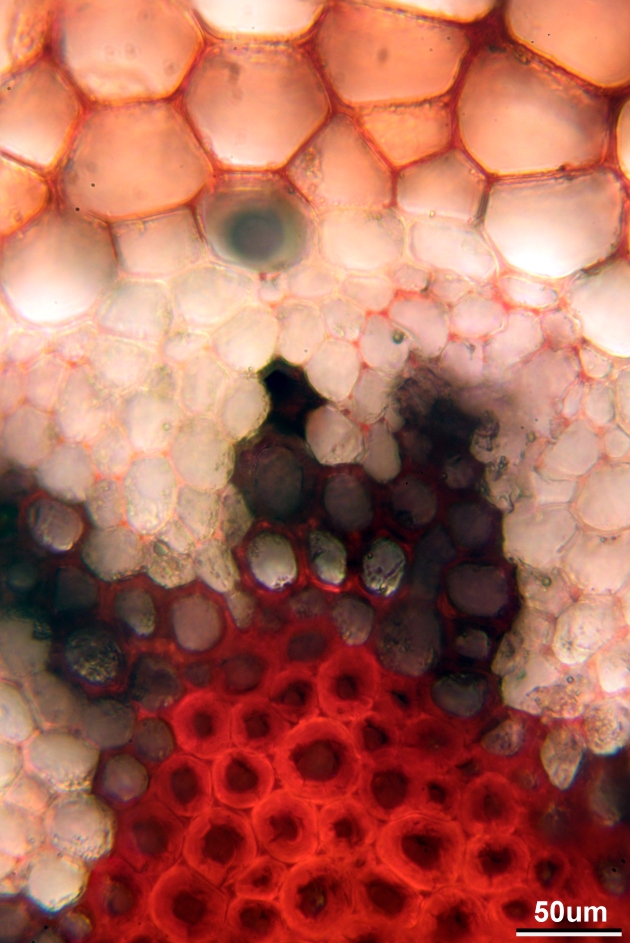
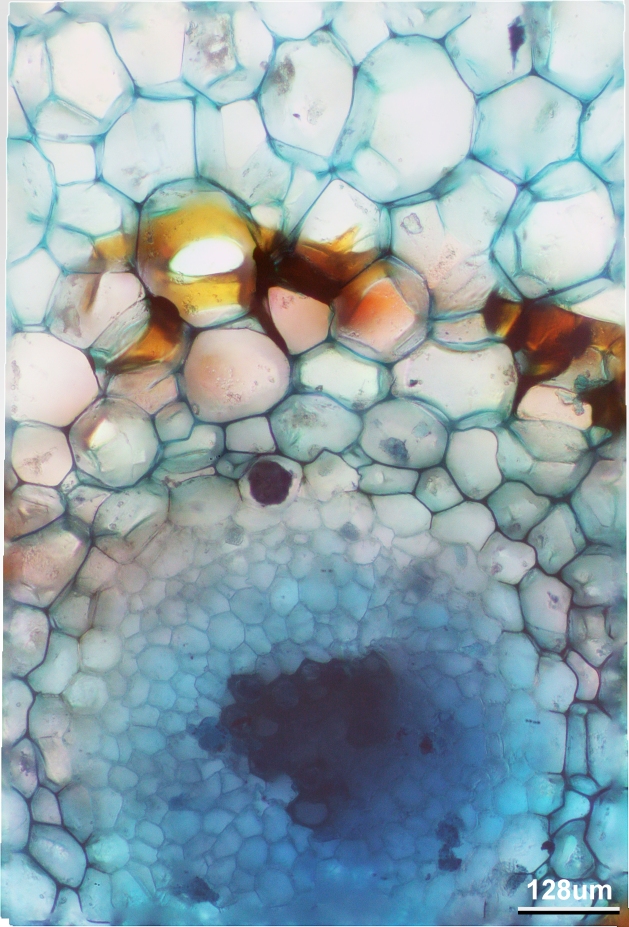
Cycadeoids grew somewhat like palms, cycads, and some cacti today. These plants all have a primary thickening meristem. In other woody plants the growing shoot tip adds height to a plant whereas the vascular cambium adds thickness by producing wood and bark. In plants with a primary thickening meristem the growing tips add both height and girth. They either don’t produce wood at all (palms) or the vascular cambium produces relatively little wood (cycads and cycadeoids). Like many cycads, Cycadeoidea stems are covered in the hard, persistent bases of the old, shed leaves.  Unlike in modern cycads where seed cones or pollen cones are produced terminally as a dichotomous branch, the outer armor of leaf bases in a Cycadeoidea is interspersed with the cones that produced both pollen and seeds (you may see them referred to as flowers).

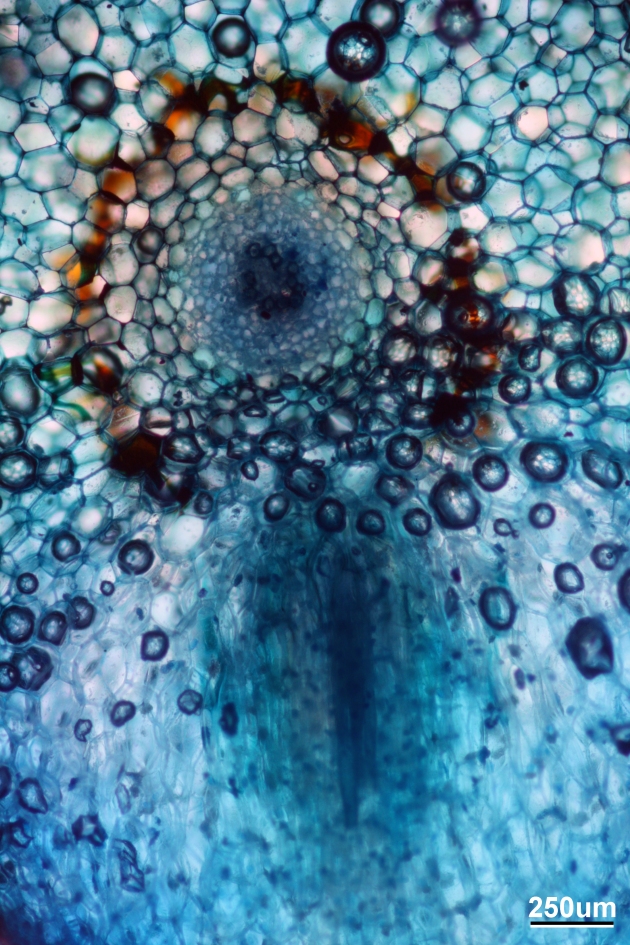
The images here are taken from slides made in the early 1900’s for publications by Wieland (1916). The slides come from one silicified Cycadeoidea trunk. Images of similar petrified trunks are not hard to find online; however, it can be fairly difficult to see detailed pictures of the internal anatomy without subscriptions to a few different scholarly journals.

First I have a longitudinal section of a Cycadeoidea trunk, as though the stem was in half along the axis. Look at how small the seeds were! In some cycadeoids there were cones associated with every leaf. These plants had high fecundity. [UPDATE: I just wanted to point out that the little gray or brown bodies in the seeds below and in the second image are the cute little baby cycadeoids. In some of them you can make out a couple cotyledons.]

Here is a tangential section of the trunk through the outer armor of leaf bases and cones. Because the cones are borne laterally, you are looking at cross sections of the cones, as though the cone was cut in half perpendicular to the axis.

Last is a near-longitudinal section through a stem apex. Most of the stem tissue is opaque (black), but you can see the pith bounded by vascular tissue at the bottom of the photo, and the armor of leaf bases along the sides with a cone base in the lower left. The tip is where we would expect to see immature leaves developing, but I’m not sure precisely what the wavy, hair-like lines are, but I will come back to them in a future post, after I’ve done a little more research. Mature leaves have never been found attached to permineralized Cycadeoidea trunks, but we know they were thick pinnate leaves similar to cycads because the arrangement of the vascular bundles in the petiole or rachis of detached leaves can be matched with the pattern in the persistent leaf bases (Yamada et al. 2009)

Wieland, G.R. 1916 American Fossil Cycads. Vol. 1. Carnegie Institute of Washington, Washington D.C.

Yamanda, T. J. Legrand, and H. Nishida 2009. Structurally preserved Nilssoniopteris from the Arida Formation (Barremian, Lower Cretaceous) of southwest Japan. Review of Palaeobotany and Palynology 156: 410-417

North America’s oldest flowering plants

The earliest evidence of flowering plants in North America comes from the Potomac Group deposits of Virginia and Maryland. The plant fossils found there provide a picture of what some of the earliest angiosperms looked like and how they grew. In addition to being of general interest, I hope that the pictures and information that I put up here will be of use to some students and teachers out there. Scale bars are always 1cm.

The Potomac Group includes the Patuxent Formation (Fm.), the Arundel clay, and the Patapsco Fm. It stretches out in an arc from Petersburg, VA, north through Fredericksburg, VA and into Northernmost Delaware along the coastal plain. A few years back Hochuli et al. (2006) published an update of the age of the Potomac Group deposits. They correlated the Potomac Group with well-dated deposits in Portugal by comparing the first occurrences of certain pollen taxa and the overall diversity-abundance patterns of pollen and spores. The Patuxent Fm. was assigned an Aptian age because of the presence of certain species of monocolpate pollen that have been found in the Aptian deposits of Portugal and around the world. At least one of these (Pennipollis peroreticulatus) is not found in pre-Aptian deposits. Tricolpate pollen grains, indicative of the eudicots, have not been reported from the Aptian section used by Hochuli et al., or in the Patuxent Fm. (see update below!)

Interestingly, tricolpate pollen is reported from Earliest Aptian deposits in England and Brazil (Friis et al. 2011) roughly 125-120Ma. According to Hochuli et al., in Portugal there is a well dated section through the Aptian that does not have any tricolpate grains. Hochuli et al. cited the absence of tricolpate pollen in the Patuxent Fm. and the Aptian portion of the Luz section as further evidence for the correlation. However, the latest Barremian-Early Aptian sites Torres Vedras and Catefica, also in Portugal, do have tricolpate pollen grains (Friis et al. 2011). So, no eudicots have been found in the Luz section, but they’re around in Portugal as well as England and Brazil. A little later in the Aptian, eudicot pollen and leaves are found in more places including Israel, Tunisia, China, and Argentina. So why aren’t they in the Patuxent Fm? Is it actually older? Are they so rare that we just missed them? We will return to the case of the missing Patuxent Fm. eudicots below.

Only a handful of plant fossil collections made over the last ~130 years have resulted in published records of Patuxent Fm. angiosperm leaves. Doyle and Hickey (1976) and Hickey and Doyle (1977) mention some these sites and discuss five distinct types of leaves. These are Acaciaephyllum longifolium, Proteaephyllum reniforme, Ficophyllum sp. Quercophyllum sp., and Rogersia sp. These are all simple leaves. (The names of these are unfortunate; the plants are only distantly related to the modern genera Acacia, Protea, Ficus, and Quercus.)


Acaciaephyllum leaves are narrow with a smooth margin but a glandular tip. They appear to have acrodromous venation. One or two pairs of lateral veins diverge from the midvein and then curve together again toward the apex. At the apex the midvein terminates in a gladular tooth that is also fed by two of the lateral veins.

Proteaephyllum reniforme is a challenging species. As far as I know there is only one specimen and it doesn’t seem to be standing the test of time very well. The midvein bears closely spaced, pinnately-arranged secondary veins near the base of the leaf, and then about halfway up the leaf it seems to transition into a spray of about 6 (but maybe 5 or 7) different veins that fan out. I can’t make out much of a margin, but by following some of the most basal secondary veins with very high magnification, it becomes clear that the base widens rapidly above the transition from petiole to lamina.

So far, I’ve found only one specimen of Ficophyllum labeled the Patuxent Fm. in the Smithsonian’s collections. It is the base of a relatively large pinnate leaf with an entire margin as far as is visible. It has secondary veins near the base that sweep away from the midvein (decurrent) and secondary veins higher up that come straight out (excurrent). Another leaf, labeled Proteaphyllum tenuinerve, looks more like the Ficophyllum leaves found in the Arundel Clay. A third leaf labeled Proteaephyllum tenuinerve looks different yet again, but could be a member of either of the other two types with different preservation.

Rogersia (not pictured) was mentioned as a Patuxent Fm. taxon in Doyle and Hickey 1976 based on “recent” collections as well, but the Patuxent Formation specimen was not figured. It appears that the specimen is not housed at the Smithsonian. Rogersia is an entire, pinnate leaf with decurrent secondary veins. The petiole is not always well differentiated, suggesting it may have been an herb. Quercophyllum (not pictured) is a pinnate leaf with glandular teeth, but the Patuxent Fm. specimens were housed at the University of Michigan Museum of Paleobotany in 1976. They may still be there, but I didn’t check.

In looking through these collections, I have come across specimens that are distinct from those original five. The total, it seems to me, is in fact eight. In addition, Upchurch (1984) figured at least four types of Patuxent Fm. angiosperm cuticle from one site, and there are a few mentions here and there in the literature that diverse angiosperm fruits and seeds have been recovered from the Patuxent Fm. as well, but I haven’t read about these yet. In any case, the sampled angiosperm diversity in the Patuxent Fm. is higher than is often discussed. But where are the eudicots? Well, I think I’ve found one, but I’ll have to post about it sometime in the future. I promise it will be exciting!

UPDATE! It turns out that I missed an important detail. Doyle (1992) briefly mentioned that a few rare tricolpate grains were reported from one Patuxent Fm. site, and it is the same site as the new leaf fossil I hinted at the end of this post!

Doyle, J.A. 1992. Revised palynological correlations of the Lower Potomac Group (USA) and the Cocobeach sequence of Gabon (Barremian-Aptian). Cretaceous Research 13:337-349

Doyle, J.A., Hickey L.J. 1976. Pollen and leaves from the Mid-Cretaceous Potomac group and their bearing on early angiosperm evolution. In: Beck, C.B. ed. Origin and Early Evolution of Angiosperms. Columbia Univ. Press: New York & London. pp. 139-206.

Friis, E.M., P.R. Crane, and K.R. Pedersen 2011. Early Flowers and Angiosperm Evolution. Cambridge University Press: New York.

Hickey, L.J. and J.A. Doyle 1977. Early Cretaceous evidence for angiosperm evolution. Botanical Review 43(1):2-104

Hochuli, P.A., U. Heimhofer, and H. Weissert 2006. Timing of early angiosperm radiation: recalibrating the classical succession. Journal of the Geological Society, London 163:587-594.

Upchurch, G.R. 1984. Cuticular anatomy of angiosperm leaves from the Lower Cretaceous Potomac Group. I. Zone I Leaves. American Journal of Botany 71(2):192-202

Follow

Get every new post delivered to your Inbox.